
What You Need to Know
With the Canadian federal election scheduled for October 19, 2015, the electoral candidates will be preparing their campaigns to win the votes of the citizens in hopes to become the next prime minister. This is the best opportunity for Canadians to voice their opinions, and voters will be paying close attention to the key issues that will define the election. Kids are not allowed to vote, but it’s nonetheless a chance to learn about the political leaders of our country and the impact of the decisions made in an election.
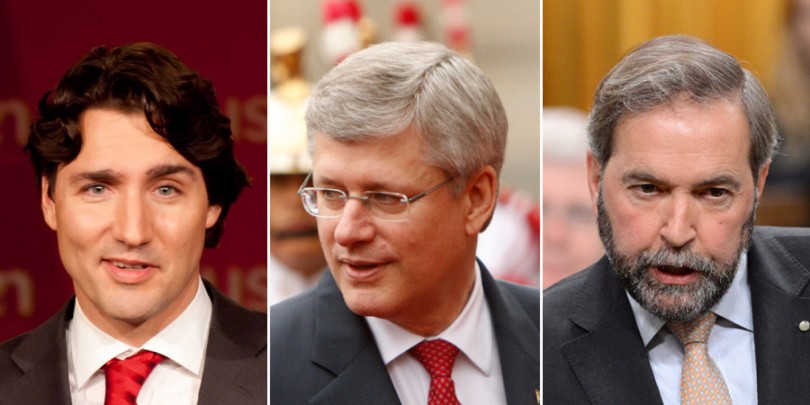
Canadians can expect a strong race between Stephen Harper, Justin Trudeau and Thomas Mulcair.

The Conservative party is currently in office, and Prime Minister Stephen Harper hopes to keep it that way. If he does, it would be his fourth-straight mandate. Since the last federal election, he guided Canada successfully through the global financial crisis, focused on developing the country’s economy and contributed ideas for long term prosperity. Despite his controversial support for Alberta’s tar sands and his harsh-on-crime agenda, Harper has a strong campaign.
Justin Trudeau, who is leading the Liberal party, will be hoping to turn the tables. Young and open-minded, he is often praised for the energy that he brings to the Canadian society. One of his desires is to endorse Canada’s diversity, and it is shown through his positive approach to acceptance and freedom. As prime minister, Trudeau declared that he would make a significant commitment to Canadian culture and bring forth “a vision about how culture matters economically but also around who we are as a nation”, hinting at a future culture and arts funding. He also stressed the importance of Canadian content in the media and promotion of Canadian stories on the global stage. Voters can expect Trudeau to bring forth new solutions and new ideas. Nevertheless, he lacks experience compared to the other candidates, leading some citizens to question his ability to lead the country.
Thomas Mulcair, who has brought the NDP (New Democrats’ Party) into the limelight. He distinguished the NDP’s platform well ahead of his opponents, which include plans for child care, health care funding as well as a federal minimum wage. Mulcair also declared his strong support for an environmentally sustainable nation, and states that a NDP government would work with all Canadians to make the right to a clean and healthy environment. As great the ideas sound, Thomas Mulcair needs to clarify to voters where this money will come from and convince them that the implementation of these policies will not result in a major tax increase.
There are many issues that need to be addressed in the upcoming election, and voters will be paying attention to how the parties plan to tackle them. Given the recent events, Canadians will decide the next prime minister for two main issues in their mind: the economy and our foreign policy.
Economy
A country’s economy has a direct impact on the lives of its citizens. As a result, a deciding factor of the upcoming election is our economic plan. Which party is the most likely to make the best economic contribution? They need to convince voters that their lives will improve in the short term and that there will be enough resources to fuel the economy in the long run.
In the recent years, Canada’s economy has been growing at a slow pace; employment in particular. According to numerous studies, Canada is facing a substantial shortage of skilled workers, as more people retire from the workforce without enough new workers to replace them. The country is in urgent need of health care workers, engineers and scientists. On the other hand, many people are unable to find the job that suits their skill set. The future government will have a major task to help young people to find jobs. How will the government boost the country’s innovation? How will they improve Canadians’ job prospect? The country’s crisis of “people without jobs, jobs without people” poses the biggest threat to our economy. For that reason, the elections will be largely dependent on who will propose the most reasonable and effective plan to counter it.
Foreign policy
Foreign policy is not usually the main focus during Canadian federal election campaigns, but times have changed. In the wake of recent conflicts regarding the armed rebellion in Ukraine and the rising threat of Islamic State terrorists, one question emerges: how should Canada engage? It is unlikely that these situations will resolve quickly, which means voters are expected to be more vocal about how our leaders plan to counter the world’s deteriorating peace.
Following the rise of pro- Russian rebels in Ukraine, Canada has re-established its strong support for sovereignty and peace. At the same time, there is also a lot of concern over the process in which the government enforces the principles we stand for. How and when should Canada intervene? Voters want a leader that has reasonable foreign policies.
The war against terrorists in Syria and Iraq has also reminded our nation that escalating violence in these countries also have implications for our citizens. The recent shooting of two Canadian soldiers shocked the whole nation, and confirmed the fact that terrorism is an inevitable issue that we must face. But how do we counter the radicalization of young people? And how far should the government go in the name of national security? For public safety, the Conservative government has vowed to strengthen the power of Canada’s Spy Agency and to propose tougher laws while the opposition parties criticize the loss of fundamental freedoms. Canadians will be looking for leadership, as well as a prime minister that can ensure a peaceful future.
By voting in the upcoming federal election, Canadians will be able to voice their opinions on major issues that affect the whole nation. In a country that is dependent on the active participation of its citizens, voting remains as one of the best ways to engage in the government’s decision-making.